Blog
Custom Mirrors for Gyms and Studios in NJ: What You Need to Know Before You Order
Published October 26, 2026
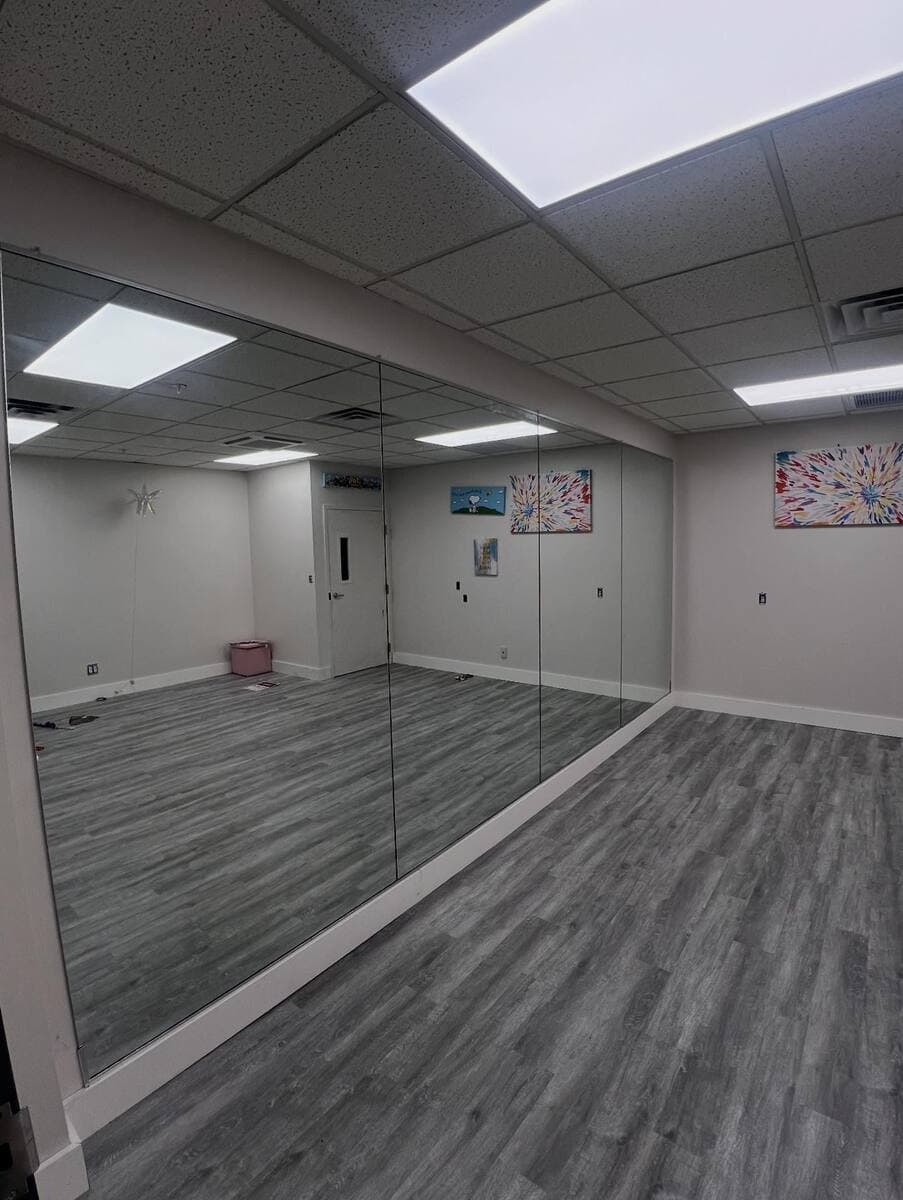
A mirror wall can make a gym, dance studio, or home workout space feel larger and help people check their form. It is also one of the biggest glass projects you can order for a room. A full wall of mirror involves large panels, wall mounting that has to hold for years, and safety questions that a bathroom mirror never raises. This guide covers what to know before you order.
How Gym and Studio Mirrors Differ From Residential Mirrors
A bathroom or bedroom mirror is a single piece hung over a vanity or on a door. A gym or studio mirror wall is closer to a construction project. Home gyms, fitness studios, and dance studios are one of the fastest-growing uses for custom mirrors in New Jersey, and the planning is different in three ways.
- Size. A full mirror wall means larger panels and often several of them side by side.
- Mounting. The panels need wall-safe mounting systems that suit the wall behind them.
- Safety. In a room where people move quickly and use equipment, glass safety matters more.
We handle the whole process, from measuring the space to mounting multiple panels for a seamless, wall-to-wall finish. See our mirrors page for everything we fabricate.
Tempered or Standard Mirror Glass?
Standard mirror glass is the most common option, reliable and cost-effective for most residential installations. Tempered glass is heat-treated to be significantly stronger than standard glass of the same thickness, and when it breaks it shatters into small, rounded pieces instead of long, sharp shards.
For a gym or studio, we generally recommend tempered glass for safety. That is especially true where weights, equipment, or fast movement are involved, or where liability is a concern for a business. Tempered glass costs somewhat more than standard, but the difference is usually modest compared with the overall project. Our glass types page explains tempered, laminated, and other options in more detail.
Planning the Size and Layout of a Mirror Wall
Before you order, decide how the mirror will be used. A few questions shape the layout:
- How much wall do you want covered? A full wall gives the biggest effect, but a partial wall at standing height can serve a small home gym well.
- How high should it go? Think about the tallest person using the room and about how the mirror reads from different spots.
- How many panels? Larger panels mean fewer seams. Very large panels are harder to handle and install, so the number of panels is a balance of look and practicality.
- Where will the seams fall? Planning panel breaks around outlets, corners, or equipment keeps the finished wall clean.
- Do you need custom shapes or cutouts? We cut mirrors to custom dimensions and shapes, and can work from measurements you provide or send someone to measure on site for accuracy.
Mounting Systems and Wall Types
The wall behind the mirror decides how it should be mounted. Common wall types include drywall, cinder block, and tile. Each needs a mounting approach suited to it, and the hardware has to be rated for the size and weight of the glass.
- Drywall. Mirror panels must be anchored properly, not just hung on the surface. The mounting method needs to account for the weight of large glass.
- Cinder block. A solid wall can support heavy glass well, with mounting hardware chosen for masonry.
- Tile. Mounting over tile needs extra care so the surface and the mirror are not damaged.
Our installers mount every mirror using hardware rated for its specific size and weight, and we clean up completely when the job is done. If you are unsure what is behind your wall, tell us when you request your quote.
What Drives the Cost of a Gym Mirror Wall
Pricing for a gym mirror wall is set by the project, not by a flat rate. The main factors are:
- Total size of the mirror wall
- Glass type, such as standard or tempered, and thickness
- Edge finish, such as polished or beveled
- Number of panels and how complex the layout is
- Wall type and mounting requirements
- Custom cuts around outlets, corners, or fixtures
A standard bathroom vanity mirror typically costs less than a large gym wall installation. For a number based on your actual room, request a free estimate. We measure the space and give you pricing for your specific project.
What the Installation Process Looks Like
- Free estimate and measurement. We look at the space, measure the wall, and talk through glass type and layout.
- Fabrication. Your mirror panels are cut and finished in our South Hackensack shop and inspected before they leave.
- Installation. Our crew mounts the panels, checks alignment across seams, and cleans up.
Larger gym and commercial mirror walls may take longer than a standard residential installation, depending on the number of panels and the mounting surface. For a full breakdown, see our guide to how long glass installation takes in NJ.
Maintenance and Cleaning for Large Mirrors
Large mirror walls show smudges and fingerprints, especially in a busy gym. A few habits keep them looking sharp:
- Clean with a soft cloth and a glass cleaner, and avoid harsh abrasives.
- Spray the cloth rather than the mirror so cleaner does not run behind the edge.
- Wipe frequently in high-touch areas near equipment.
- Check the mounting and edges from time to time, and call us if you notice anything loose.
Mirror Walls for Businesses
Studios, salons, and gyms in North Jersey often need mirrors sized to fit existing stations or a new build-out. We install across North Jersey and Central Jersey, and we can plan a mirror wall around your space and schedule.
Ready to Plan Your Mirror Wall?
Request a free estimate and we will measure your space, recommend the right glass and layout, and give you a timeline.
More from the Blog
Frameless Shower Doors for Small Bathrooms in NJ: What Works and What Does Not
Which shower door styles fit a tight New Jersey bathroom, how to check clearance before you order, and the mistakes that lead to a bad fit.
How Long Does Glass Installation Take in NJ? A Realistic Timeline by Project Type
Realistic timelines for shower doors, mirrors, storefronts, windows, and shelving, plus the three things that most often delay a glass project.