Blog
What Is Tempered Glass and When Do You Need It in NJ?
Published August 24, 2026
Tempered glass comes up constantly in conversations about shower doors, entry doors, and window replacement, but many homeowners and business owners are not entirely sure what it actually is or why it matters for their project. Here is a straightforward explanation of what tempered glass is, where it is required, and how to think about it for your own home or business.
What Tempered Glass Is and How It Is Made
Tempered glass starts out as standard glass and is transformed through a controlled heating and rapid cooling process. The glass is heated to a high temperature and then cooled very quickly using blasts of air, a process called quenching. This rapid cooling creates internal tension between the surface and the core of the glass, and that internal tension is what gives tempered glass its added strength compared to untreated glass of the exact same thickness.
How It Differs From Standard Annealed Glass
Standard, or annealed, glass cools slowly and evenly during manufacturing, which means it never develops the internal tension that tempering creates. As a result, annealed glass is more prone to breaking under stress or impact, and when it does break, it tends to shatter into large, sharp shards that stay connected to jagged edges. This is exactly the kind of breakage pattern that building codes are designed to prevent in high-risk locations.
Why It Breaks Into Small Pieces Instead of Shards
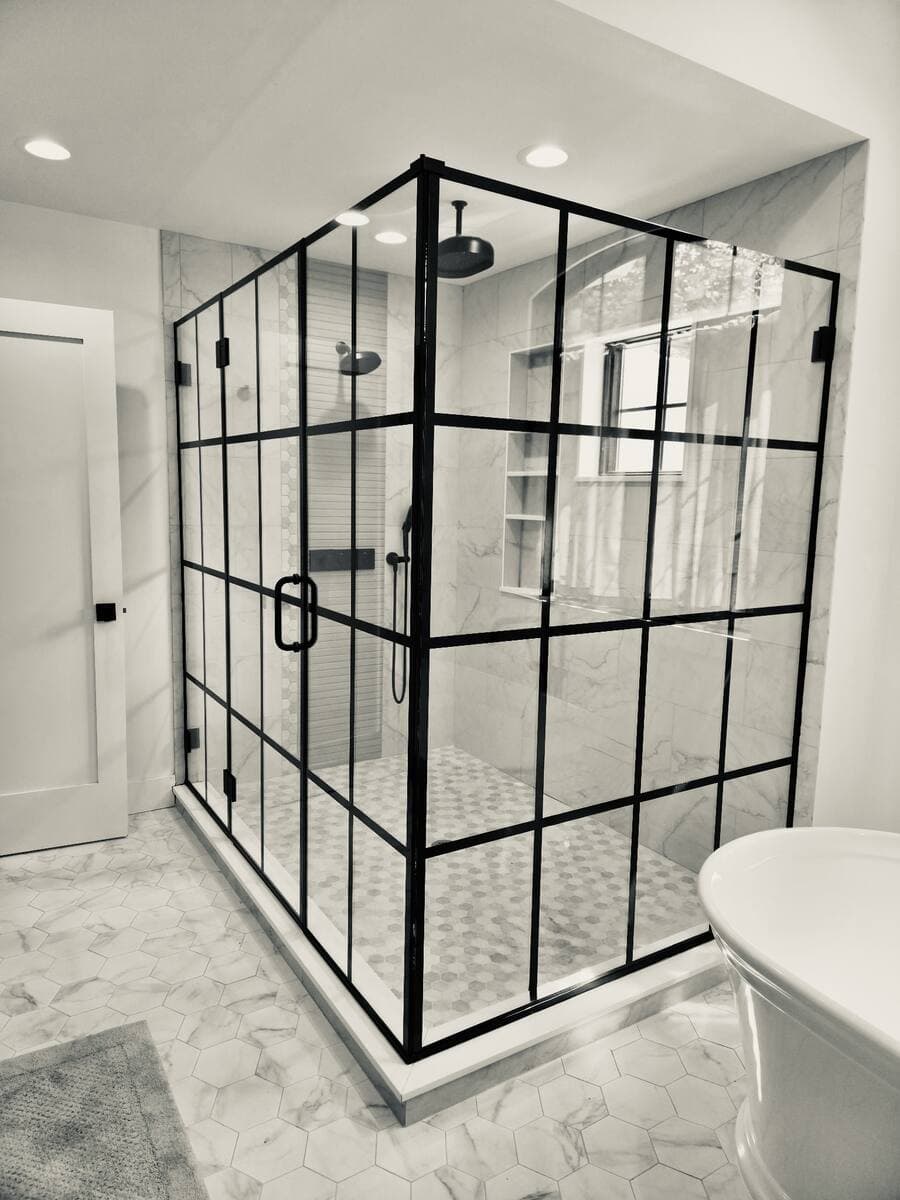
Because of the internal tension created during tempering, when tempered glass does eventually break, that stored energy releases all at once and causes the entire pane to break into small, granular pieces with dulled edges rather than long, dangerous shards. This is the core safety benefit of tempered glass and the main reason it is required in locations where broken glass poses a meaningfully higher injury risk, such as a shower enclosure someone might fall against.
Where NJ Building Code Requires Tempered Glass
New Jersey's building code, based on the Uniform Construction Code, requires tempered glass in a number of specific locations. These include shower and tub enclosures, glass entry doors, sidelites and windows located close to doors, and glass panels positioned near floor level in certain rooms where someone could fall into them. Skylights and other overhead glazing are another common location where tempered or laminated glass is typically required, since a failure needs to break safely rather than fall onto whoever or whatever is below.
Where Homeowners and Business Owners Choose It Even When Not Required
Beyond strict code requirements, many homeowners and business owners choose tempered glass in places it is not technically mandated, simply for the added peace of mind. This is especially common for glass tabletops and shelving in homes with children or pets, where an accidental impact is more likely, and for commercial applications where liability from a glass failure is a real concern regardless of what code technically requires.
Cost Difference vs. Standard Glass
Tempered glass typically costs more than standard annealed glass of the same size and thickness, since the tempering process adds an extra manufacturing step and requires specialized equipment. That said, the price difference is usually modest relative to the overall cost of a project like a shower door, entry door, or tabletop, and it is rarely the deciding factor once safety and code requirements are taken into account.
How to Identify Whether Existing Glass Is Tempered
Tempered glass is required by code to carry a permanent etched marking, usually a small logo or text stamped into a corner of the pane, indicating that it has been tempered and meets safety glazing standards. If you cannot locate a marking on existing glass in a location where tempered glass is required, such as an older shower enclosure, it is worth having it evaluated by a professional rather than assuming it is safe.
Not Sure What Your Project Needs?
Not sure whether your project needs tempered glass? Totowa Glass can help you figure out exactly what your project requires and whether your existing glass meets current standards. Call (973) 390-3900 for a free consultation.
More from the Blog
Glass Repair vs. Glass Replacement in NJ: How to Decide
When a repair is enough, when full replacement is the smarter choice, and how to tell the difference before you spend anything.
Commercial Storefront Glass in NJ: What Business Owners Need to Know
Storefront systems, NJ permits, realistic timelines, and how to evaluate a commercial glass contractor before you sign anything.