Blog
Glass Storefronts vs. Aluminum Storefronts in NJ: What Is the Difference?
Published October 26, 2026
Business owners usually say they want a "glass storefront," but the phrase covers two quite different approaches. One is an aluminum-framed storefront system, where glass sits in a metal frame. The other is an all-glass entrance, where the glass itself is the door and the frame mostly disappears. Both are common across New Jersey, and the right one depends on your business, your building, and your budget. Here is how they differ and how to decide.
What an Aluminum Storefront System Is
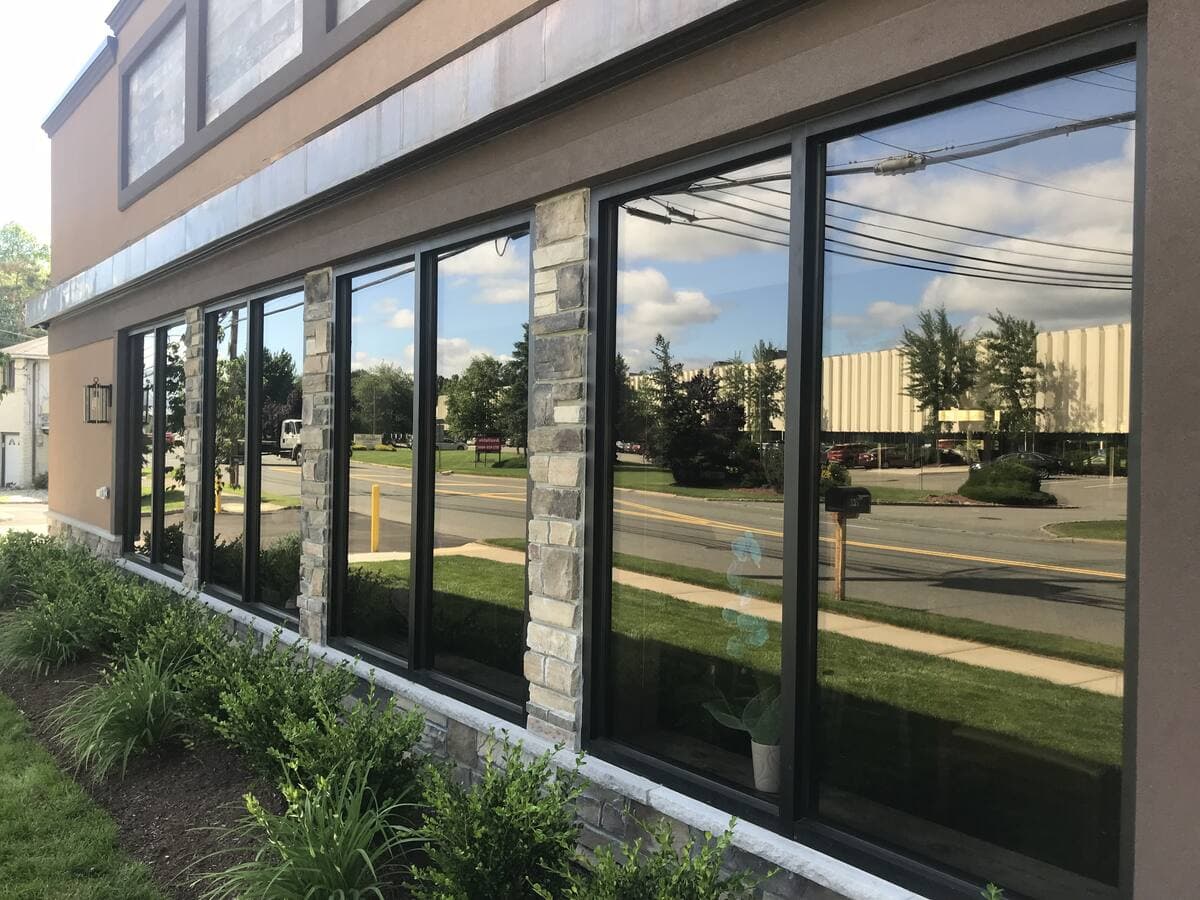
An aluminum storefront system is a framed assembly. Aluminum framing forms the structure, and glass is set into it to make the windows, the transoms, and the doors. The framing carries the load, so the system holds up to daily foot traffic and can be built in many sizes and layouts.
Storefront systems for new construction and renovations include the structural framing, the glazing, and the weatherproofing that keeps water and air out. The doors can be standard aluminum-framed entrances for everyday use, or fully custom designs for a particular look.
What an All-Glass Entrance Is
An all-glass entrance uses heavy glass doors with no visible metal frame around the glass itself. These frameless doors are often called Herculite doors, and they are the all-glass entrance doors you see on upscale retail and office buildings. They need heavy-duty hardware to support the glass under constant use, because the hardware, not a frame, carries the door.
The glass around the entrance can also be frameless or minimally framed, which gives a clean, open look from the street.
The Key Differences
Appearance
An aluminum storefront has visible framing lines. That can be a plus, since a slim frame adds structure and a defined look. An all-glass entrance is more open and minimal, with almost nothing between your customer and your display.
Cost
In general, an all-glass entrance costs more than a standard aluminum-framed one, because of the heavier glass and the precision hardware it requires. Costs depend heavily on the size of the opening, the glass type, and the hardware, so there is no single number. Request an estimate based on your actual building.
Security
Security comes mostly from the glass and the hardware, not from the choice of aluminum versus frameless. Tempered glass is standard for most storefront and entrance work. Laminated or security glass is often used where impact resistance or sound control matters more. A strong frame helps, but the right glass and locking hardware matter as much.
Maintenance
Aluminum framing is durable and needs regular cleaning. All-glass doors need their hardware checked from time to time, because the hinges and fittings carry the load. Both need clean glass to look their best.
Which Is Better for Your Type of Business
Retail
Retail storefronts need glass that maximizes visibility for merchandising while standing up to constant door traffic. An all-glass entrance gives a premium, open feel. An aluminum system works well where you want strong framing around large display windows.
Office
Office buildings need entrances and partitions that look professional without sacrificing security. Aluminum systems are a practical fit for many office buildings. All-glass doors suit a lobby where you want an upscale first impression.
Restaurant
A restaurant benefits from large windows that show the room and invite people in. Aluminum framing is a common choice for a durable, easy-to-maintain front. An all-glass entrance can work for a more upscale concept.
New Jersey Weather Considerations
Storefront glass has to handle New Jersey's four seasons: hot summers, cold winters, and heavy rain and snow. Proper weatherproofing matters for either system, and a storefront system includes it as part of the installation. Winter also means salt and moisture around the entrance, so the quality of the hardware and the weatherproofing matters. If heating costs are a concern, ask about insulated or Low-E glass for your windows. Our glass types page explains the options.
Customization Options
Both approaches can be customized. We build custom storefront systems, commercial entrance doors, Herculite frameless glass doors, glass office partitions, glass railings, and curtain wall systems. Because everything is fabricated in our own shop, we can build to non-standard layouts that off-the-shelf systems cannot handle. Our commercial storefronts page covers the full range.
Permits and Compliance
Commercial glass installations, especially new storefront systems, curtain walls, and structural glass railings, often require permits and have to meet New Jersey building code requirements for safety glazing and load-bearing hardware. We handle projects that require permitting regularly and can walk you through what your specific project will need before work begins.
How to Decide Based on Budget and Building Type
A few questions will point you in the right direction:
- What is your budget? If cost is the main concern, an aluminum-framed system is usually the more practical starting point.
- What impression do you want? For a premium, open look, consider an all-glass entrance.
- How much foot traffic do you have? High-traffic doors need heavy-duty hardware, whichever style you choose.
- What is the building like? The existing structure and the size of the opening affect what will work.
- What are your security needs? Talk to us about tempered, laminated, or security glass.
- Do you also need windows or doors? See our windows and doors page if your project covers more than the front of the building.
You can also read our broader guide to commercial storefront glass in NJ for permits, timelines, and how to evaluate a contractor.
Get a Recommendation for Your Building
We start with a site visit to assess the space, take measurements, and discuss your timeline and budget. Request a free estimate and we will help you choose between an aluminum system, an all-glass entrance, or a combination.
More from the Blog
Frameless Shower Doors for Small Bathrooms in NJ: What Works and What Does Not
Which shower door styles fit a tight New Jersey bathroom, how to check clearance before you order, and the mistakes that lead to a bad fit.
How Long Does Glass Installation Take in NJ? A Realistic Timeline by Project Type
Realistic timelines for shower doors, mirrors, storefronts, windows, and shelving, plus the three things that most often delay a glass project.